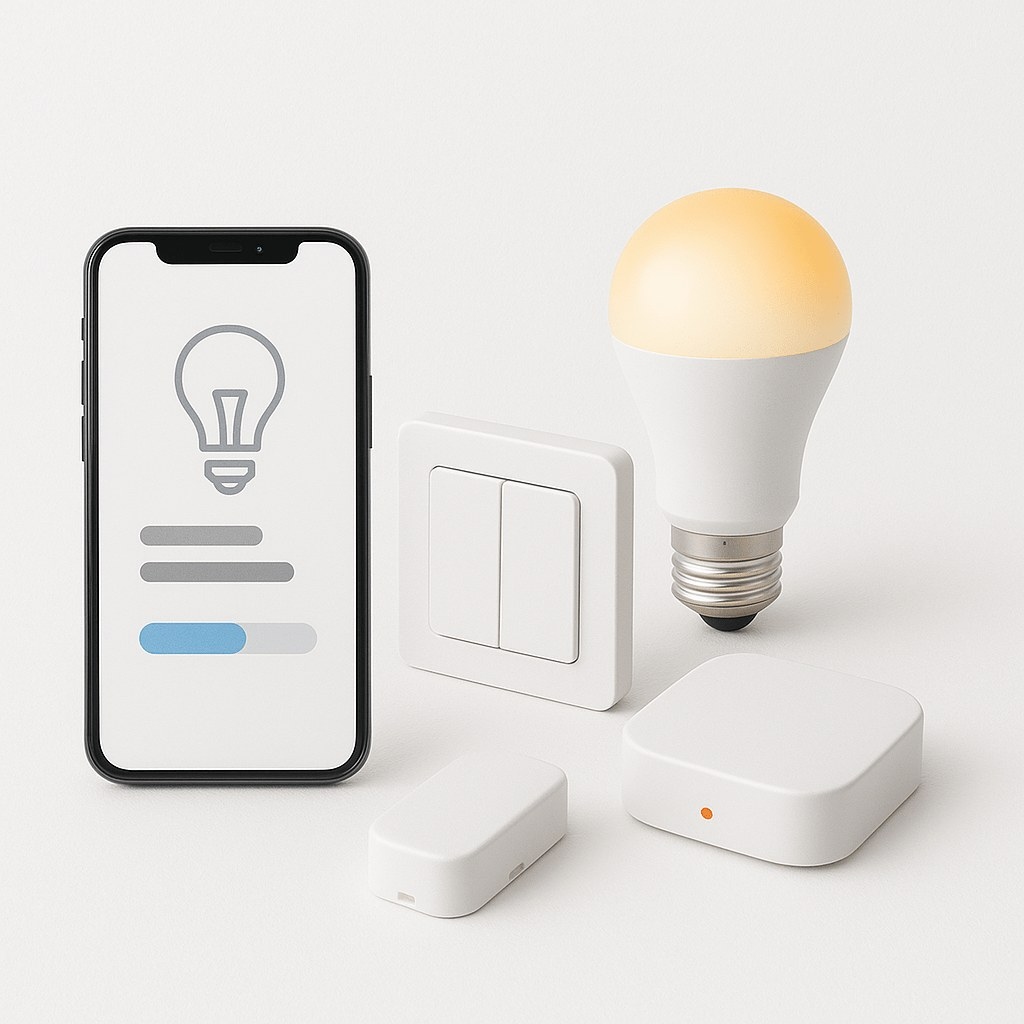
Smart lighting can improve convenience, ambiance, energy efficiency and security, but the best control method depends on your fixtures, wiring and household. This comparison focuses on smart bulbs, switches and hidden modules, including Z-Wave and Zigbee options for a Vesternet-powered smart home.
Where the smart control lives
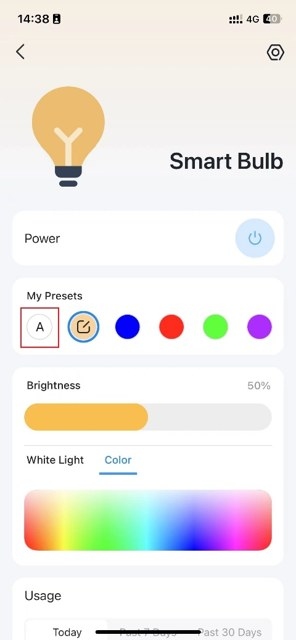
- Smart bulbs: Electronics inside each bulb provide app, voice and automation control. The fixture’s physical switch must stay ON; switching it OFF cuts power and disables those functions.
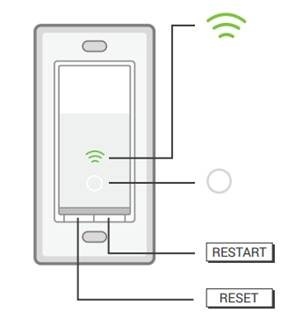
- Smart switches and dimmers: A replacement wall switch controls power to the whole fixture while the bulbs remain standard. It supports physical, app, voice and automated operation.
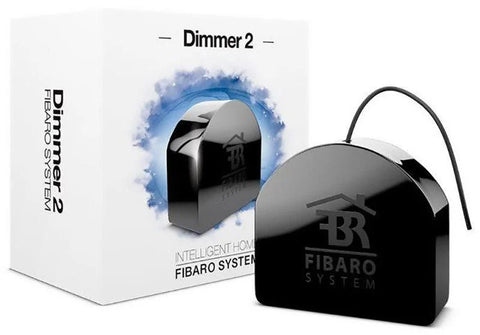
- Smart modules: A small inline relay or dimmer sits behind an existing switch or near the ceiling fixture. It controls standard bulbs while preserving the existing switch’s appearance.
Smart bulbs: simple installation and flexible color
Advantages
- Installation requires only replacing a bulb, with no wiring changes—particularly useful in rentals.
- Many models offer warm-to-cool white adjustment and full RGB color.
- Bulbs in the same fixture can often be controlled separately or grouped.
- Table and floor lamps are good candidates when wall control is not the main way they are used.
Limitations
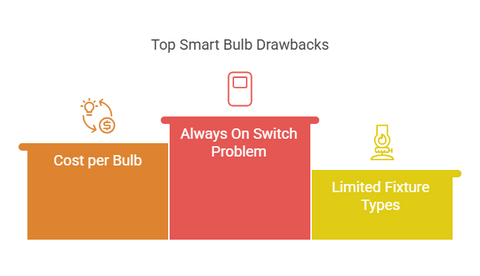
- The wall switch must remain ON. Guests or children who switch it OFF disable remote control and automation until power is restored.
- Buying several smart bulbs for one fixture can cost substantially more than one smart switch or module with standard bulbs.
- Unusual bulb fittings and integrated LED fixtures may prevent bulb replacement.
- Large numbers of inexpensive Wi-Fi bulbs can congest the network; Zigbee bulbs are also common and integrate well with hubs.
- A bulb controls only itself, not another device such as a ceiling fan sharing its switch.
Choose bulbs for rentals, color-focused lamps or fixtures, and rooms needing individual bulb control. Household members must reliably leave the switches ON, or switch guards may be needed.
Smart switches and dimmers: familiar whole-fixture control
Advantages
- Anyone can operate the lighting at the wall, just as with a conventional switch.
- One device controls every bulb on the switch, usually making multi-bulb fixtures cheaper to automate.
- Standard bulbs remain usable, including most dimmable LEDs, incandescent and halogen bulbs; verify dimmer compatibility.
- A modern, integrated appearance and smart wiring can be desirable property features.
- Some switches support motor loads such as ceiling fans, provided their ratings are compatible.
Limitations
- Installation involves electrical wiring and requires basic wiring knowledge and safety precautions, or an electrician.
- Most models need a neutral wire in the switch box, which may be missing in older homes.
- Bulbs within a fixture cannot be controlled individually. Dimmers adjust brightness but cannot change standard bulbs’ colors.
- Bulkier switches may not fit shallow or crowded boxes.
Options when there is no neutral wire
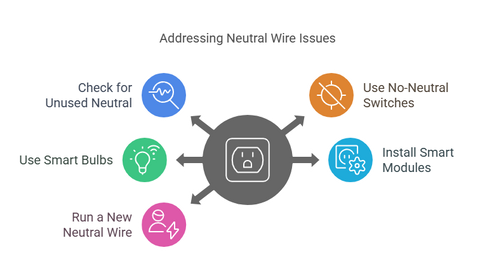
- Check the back of the box for an unused neutral bundle.
- Consider a specific no-neutral switch or dimmer, noting its limitations and any required bypass capacitors.
- Use smart bulbs instead.
- Install a smart module at the ceiling fixture, where a neutral is usually available.
- Have an electrician add a neutral to the switch box—the most complex and costly option.
Switches suit homeowners seeking integrated control, especially for chandeliers, recessed lighting and other multi-bulb fixtures. They preserve familiar operation for family and guests when color adjustment is not a priority.
Smart modules: hidden control with existing switches
Advantages
- A concealed installation preserves decorative or distinctive switches, with the module behind the plate or near the fixture in the ceiling void.
- Many modules can work with toggle or momentary (retractive) switches, retaining physical control.
- Whole-fixture control offers cost benefits similar to smart switches when several standard bulbs share a circuit.
- Depending on model and load capacity, modules may also control ceiling fans, bathroom extractors, switched outlets or other wired appliances.
- Although many need a neutral at the switch, ceiling installation can use the neutral almost always present at the fixture.
- Suitable modules and wiring arrangements can handle 2-way or 3-way switching, where several switches operate one light.
Limitations
- Accessing switch or ceiling wiring requires electrical knowledge and work in potentially cramped spaces, or an electrician.
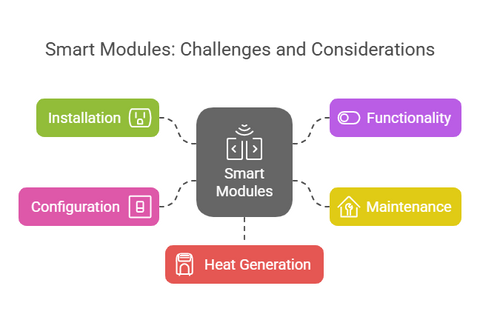
- Check dimensions carefully: shallow or crowded boxes may lack room.
- Relay modules provide on/off control; dimmer modules adjust compatible dimmable bulbs. Neither changes bulb color.
- Maintenance, resetting and replacement require access behind the switch plate or into the ceiling void.
- Matching module settings to toggle or momentary switches can require more detailed configuration in the hub interface.
- Modules produce heat, so adequate ventilation is necessary in the box or ceiling void.
Modules are useful when replacing existing switches is undesirable, when fixture-level installation is easier, or when a neutral is present at the light but not at the switch. They also suit compatible non-lighting loads and multi-way control, provided there is enough installation space.
Matching the approach to the room
- Rental property: Smart bulbs avoid permanent wiring changes. Explain why switches must stay ON, or use guards or covers.
- New build or major renovation: Accessible wiring favors switches, dimmers or modules. Switches offer intuitive primary-lighting control. Run neutrals to all switch positions, plan zones and control points, and consider modules for complex multi-way switching.
- Color-focused media room or child’s bedroom: RGBW (Red, Green, Blue, White) bulbs supply color control. Smart buttons or remotes, such as Aeotec or Fibaro models, near the door provide convenient control without relying only on an app or voice and help address the always-ON switch issue.
- Kitchen with several recessed lights: One smart switch or dimmer provides economical, simultaneous wall control. Check LED compatibility for flickering or buzzing.
- Antique or designer switches: Hidden modules preserve their appearance. Confirm box space and neutral-wire requirements.
- Ceiling fan with lights in a single switch box: Use a specialized fan/light control switch, or a separate smart light switch and smart fan module if the wiring permits separate control. Ordinary smart switches and dimmers are often not motor-rated; an incompatible unit can damage itself or the fan motor. Check specifications carefully.
Z-Wave, Zigbee or Wi-Fi?
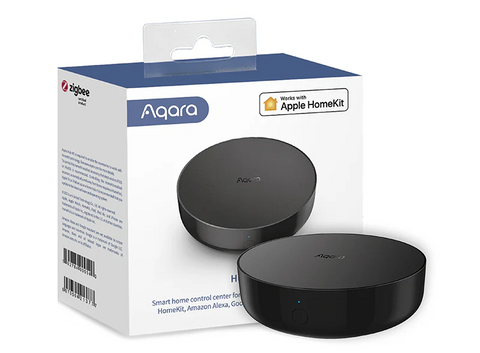
- Z-Wave and Zigbee: These are generally preferred for dedicated switches and modules. Their mesh networks operate separately from Wi-Fi, improving reliability and reducing Wi-Fi congestion, but require a compatible hub (Hubs & Gateways).
- Wi-Fi: Some bulbs and switches need no hub, simplifying initial setup. However, they can crowd the network, may depend more heavily on cloud services and become less reliable without internet, and may consume more power.
For a comprehensive installation, a Z-Wave/Zigbee hub is the recommended foundation for reliability and scalability.
Combining the three approaches
A mixed system can provide familiar everyday operation alongside flexible accent lighting:
- Main ceiling lighting: Use switches or dimmers in living rooms, kitchens, hallways and bedrooms for dependable wall control, particularly with multiple bulbs.
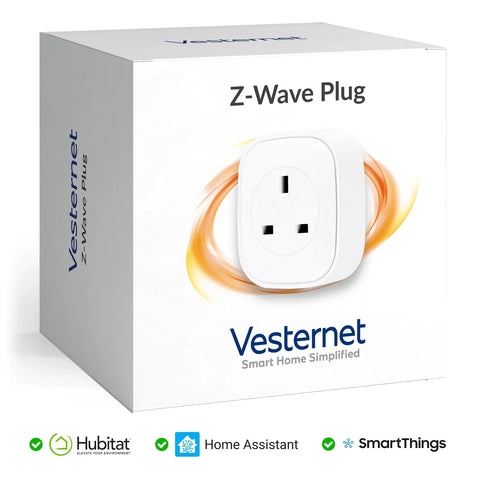
- Accent and task lighting: Choose smart bulbs for color or white-temperature adjustment in table lamps, floor lamps and under-cabinet lights. Smart Plugs can provide simple on/off control for plug-in lamps.
- Special installations: Use modules to retain existing switches, solve multi-way control requirements or install at the fixture when switch replacement or available space makes that preferable.
Relevant component options
Vesternet’s Z-Wave and Zigbee component selection includes:
- Inline switches and dimmers from Fibaro, Qubino and Aeotec for concealed installation.
- Smart Wall Controllers with integrated switch/dimmer functionality in different styles.
- Smart Plugs for lamps and other plug-in devices.
- Compatible Hubs & Gateways supporting Z-Wave and Zigbee.