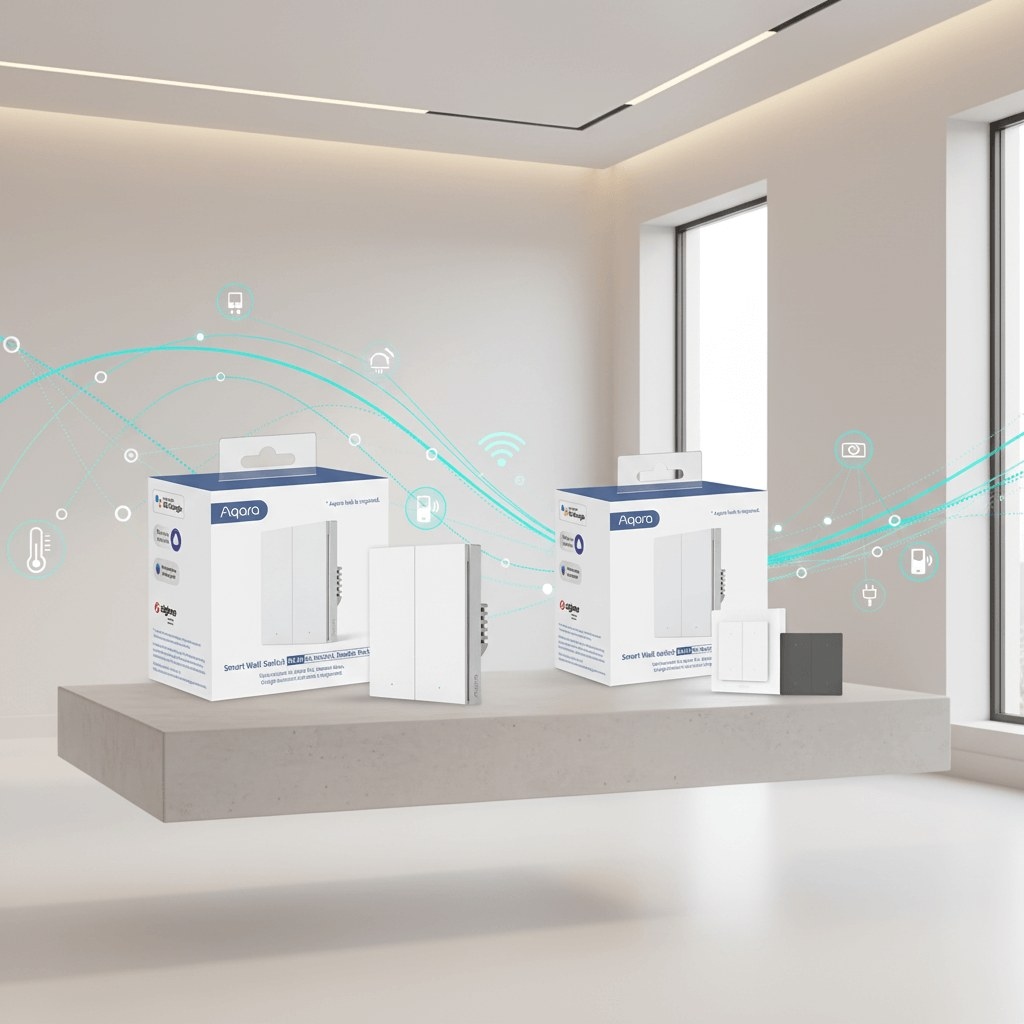
The Aqara H1 and H2 double rocker switches share core smart switching functions, but differ in wiring requirements, monitoring and automation depth. Vesternet's specialists report having tested both; their comparison positions the H1 as the simpler installation option and the H2 as the more comprehensive monitoring and control choice.
Aqara Smart Wall Switch H1: flexible installation
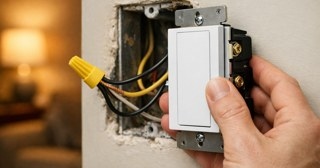
The Aqara Smart Wall Switch H1 operates without a neutral wire, removing a common obstacle when upgrading existing lighting. Its installation and control features include:
- Operation without neutral wiring.
- Compatibility with square 86mm and EU-type round wall boxes.
- 2-way switching without additional wiring.
- Wireless switch conversion for automation.
Wireless conversion lets the physical switch act as an automation trigger while retaining the electrical circuit connection. This supports scene-based control and motion-sensor integration within the smart home.
The H1 is presented as a cost-effective option with a straightforward setup suitable for DIY installation. Its no-neutral design makes it especially appealing where older wiring complicates smart switch upgrades.
Aqara Light Switch H2: monitoring and protection
The Zigbee Aqara Light Switch H2 extends beyond on/off control with energy reporting, protective functions and more coordinated automation:
- Automatic circuit disconnection in response to overheating or overload.
- Real-time power monitoring and detailed energy reports.
- Smart Home Office Mode for coordinating lighting and climate control.
- Wireless switch conversion for advanced scene automation.
Smart Home Office Mode can activate ceiling lights and smart plugs together while enabling climate-control integration. This allows workspace devices to operate as a coordinated setup rather than as separate switches.
Shared connectivity and everyday performance
Vesternet describes both models as responsive and reliable in daily use. Their core manual and automated switching capabilities are similar, with:
- Immediate responses to manual and automated switching.
- Zigbee 3.0 connectivity with mesh network support.
- Wireless conversion for scene control.
- Integration with the Aqara ecosystem and third-party platforms.
The H1 emphasises dependable operation without neutral-wire installation complexity. The H2 adds live consumption readings, historical data and automatic safety monitoring. These reports can help users understand energy-use patterns and make decisions about consumption and device management.
Where the H1 makes compromises
The H1's strengths are its no-neutral design, round wall-box support, cost-effective switching and simple setup. Those advantages come with fewer advanced functions.
It does not provide power monitoring or detailed energy-use reports, limiting its usefulness for comprehensive electrical management. It also lacks the H2's more extensive safety monitoring. Although wireless conversion enables flexible automation, the H1 does not offer the same sophisticated scene coordination as more advanced models.
H2 wiring requirements and limitations
The H2 combines power reporting, automatic overheat and overload protection, Smart Office Mode and enhanced scenes. Its main trade-off is greater installation complexity, particularly around neutral wiring.
Without suitable neutral wiring, a home cannot fully use the H2's monitoring functions, although manual load entry provides an alternative tracking method. The extra features may also be unnecessary for users who only need basic switching.
Professional installation may warrant consideration for optimal performance, especially in older properties where an electrical assessment helps establish proper operation and safety compliance.
Which switch better fits your home?
Choose according to the wiring available, the functions you need and your longer-term automation plans:
- The H1 is the stronger fit when easy installation, older wiring or reliable basic smart switching takes priority over monitoring.
- The H2 better suits users who want power data, additional automatic protection and coordinated device control, and can accommodate the neutral wiring needed for full functionality.
Both integrate with Aqara's ecosystem and support wireless conversion. The practical decision is whether the H2's reporting and protection justify its additional setup requirements, or whether the H1's simpler approach already meets your daily needs.