Smart plugs offer an accessible way to add remote control, automation and energy monitoring to everyday appliances. Choosing one involves more than comparing features, however: its wireless protocol determines how it connects, which platforms it supports and whether additional hardware is needed.
The Sonoff Smart iPlug Gen2 S61s and ThirdReality Smart Plug E2 take different approaches. The S61s prioritises hub-free, multi-platform connectivity through Matter over Wi-Fi; the E2 uses Zigbee 3.0 and helps extend an existing mesh network. For UK buyers, physical compatibility also matters.
Sonoff Smart iPlug Gen2 S61s: features and specifications
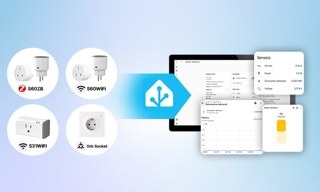
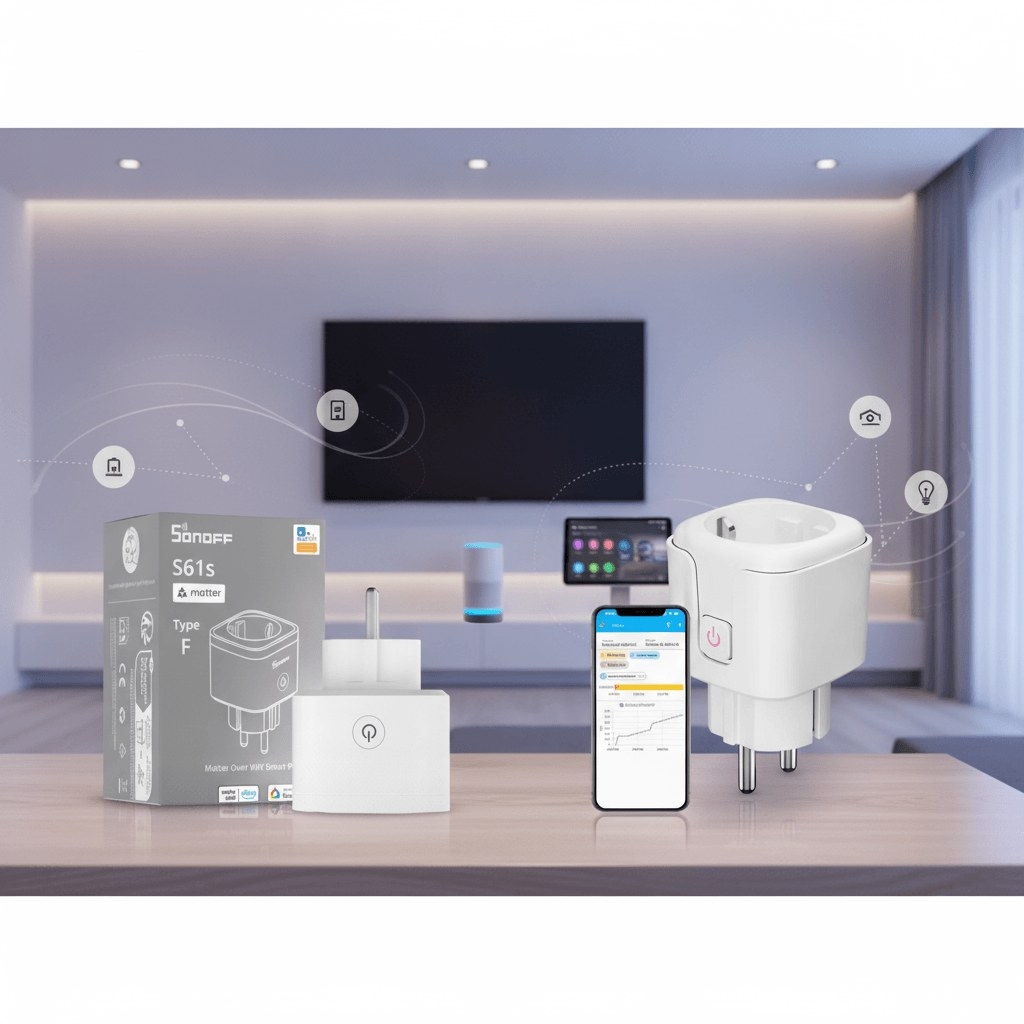
The S61s connects to Apple Home, Amazon Alexa, Google Home, SmartThings and Home Assistant without a separate bridge or coordinator. Matter allows the same device to work natively in multiple ecosystems simultaneously, making it useful for households that do not want to commit to one platform.
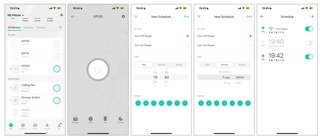
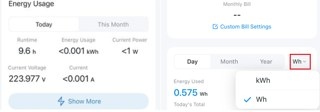
Its monitoring tools track voltage, current, power and consumption in real time. Daily, monthly and semi-annual reports provide longer-term visibility, while custom electricity rates for different time periods support cost tracking.
- Customisable overload protection up to 16A and 3680W cuts power when configured thresholds are exceeded.
- The housing uses V-0 flame-retardant materials.
- Local control remains available without an active internet connection.
- The operating temperature range is -10°C to 40°C.
- Its Type F (Schuko) form factor requires an adapter for standard UK Type G sockets.
ThirdReality Smart Plug E2: features and specifications
The E2 requires a compatible Zigbee hub or gateway. In return, it acts as a Zigbee signal repeater, extending coverage and strengthening the mesh as well as controlling a connected appliance.
Real-time energy monitoring is included, alongside power state recovery: after an outage, the plug automatically returns to its previous on/off state. Child safety shutters add household protection, and a manual override button allows control without an app. A status LED shows the device's condition, while its wall-mountable design offers placement flexibility.
- Uses Zigbee 3.0 connectivity.
- Supports loads up to 16A (3600W) at 230V AC.
- Operates between 0°C and 40°C, suitable for most indoor environments.
- Requires a compatible Zigbee hub or gateway for operation.
Matter over Wi-Fi versus Zigbee 3.0
Setup and platform support
The S61s joins your existing Wi-Fi network and registers with a Matter-compatible platform. Setup takes place through your chosen smart home app, such as Apple Home, Google Home, Amazon Alexa or Home Assistant. There is no separate coordinator to configure or additional hub to buy.
The E2 instead joins a Zigbee network coordinated by a compatible hub or gateway. This introduces an extra setup step and potentially additional cost for newcomers, but fits naturally into an established Zigbee installation. Its native platform support is narrower than Matter's, with tighter integration into its chosen ecosystem.
Network coverage and local control
Zigbee uses the 2.4GHz band and a mesh architecture in which devices pass signals between one another. As a repeater, the E2 can help improve coverage in larger properties or rooms where signals are weak. Adding Zigbee devices can make the network more resilient.
The S61s relies on Wi-Fi coverage and does not act as a mesh repeater. A reliable home Wi-Fi network keeps its direct connection straightforward, but congestion or weak coverage can limit performance.
Both plugs support local operation rather than depending entirely on manufacturer cloud servers. The S61s can be controlled without an active internet connection, while the E2 processes commands locally through its Zigbee hub.
Long-term flexibility
Matter has support from Apple, Google, Amazon and the Connectivity Standards Alliance, giving it strong industry momentum. Zigbee 3.0 is already a mature, widely supported standard used by millions of smart home devices. Both have a substantial future, though Matter's manufacturer-agnostic approach gives it a slight advantage for buyers who value freedom to move between ecosystems.
Everyday control and energy monitoring
With the S61s, platform commands reach the plug over Wi-Fi without an additional coordinator layer. Voice control through Alexa or Apple Home tends to feel responsive, and app-triggered automations work reliably when Wi-Fi conditions are good. Its main monitoring advantage is the combination of live measurements, structured usage reports and configurable electricity rates, which makes the data useful for managing costs.
The E2 benefits from Zigbee's low-latency local communication. Commands through the hub are generally fast and consistent, with the mesh offering some redundancy. Power state recovery is particularly useful when connected devices need to resume their previous operation after an interruption.
Although the E2 provides real-time energy monitoring, its reporting is less structured than the S61s's daily and monthly breakdowns with custom rate settings. Both plugs support schedules and scene automation through their respective platforms.
Advantages and limitations
Where the S61s stands out
The Sonoff model combines broad native compatibility, detailed consumption reporting and configurable overload protection without requiring a hub. Its flame-retardant construction and offline local control add practical benefits.
The trade-offs are Wi-Fi dependence, no contribution to mesh coverage and the need for an adapter in standard UK sockets. For a household with strong Wi-Fi that prioritises energy management and platform flexibility, those limitations may be relatively minor.
Where the E2 stands out
The ThirdReality model does two jobs in a Zigbee home: it controls an appliance and strengthens the network. Power state recovery, child safety shutters, a physical control button and wall mounting make it practical for shared households.
Its hub requirement is the main barrier for a new installation. Other limitations include narrower native platform compatibility, less detailed energy reporting and a minimum operating temperature of 0°C rather than the S61s's -10°C. Existing Zigbee users already have the required infrastructure, so the additional setup burden is much smaller.
Which plug suits your home?
Consider the S61s if you:
- Are starting a smart home and want setup without buying a hub.
- Use multiple platforms, including Apple Home, Google Home and Alexa.
- Want detailed energy reports, cost tracking and custom electricity rates.
- Rent your home and need a portable, self-contained solution.
Matter's simultaneous multi-platform support is especially useful if you prefer not to choose a single ecosystem. Energy-conscious households gain more than a live wattage reading, while Home Assistant users can use local control to reduce cloud dependence and keep automations working without internet access.
Consider the E2 if you:
- Already own a Zigbee hub or gateway and want to extend the mesh.
- Want child safety shutters in a family home.
- Need devices to return to their previous state after power outages.
- Prefer Zigbee's stable, low-latency local communication.
For established Zigbee households, the repeater function can benefit other devices as well as the connected appliance. The source also highlights child safety shutters as a feature Matter plugs do not typically include. Advanced Home Assistant users with a Zigbee coordinator can integrate the E2 for local control and automation without cloud infrastructure.
Property layout matters too. A Zigbee mesh can carry signals between devices in a larger home with inconsistent Wi-Fi. In a smaller home or flat with strong Wi-Fi, the S61s's direct connection is simpler and adequate.
Making the decision
Neither model is the universal winner. Choose according to whether you already have a Zigbee hub, need structured energy cost reports rather than live monitoring alone, and value multi-platform flexibility more than mesh expansion. The S61s favours hub-free connectivity and detailed reporting; the E2 favours established Zigbee networks and practical recovery and safety features.