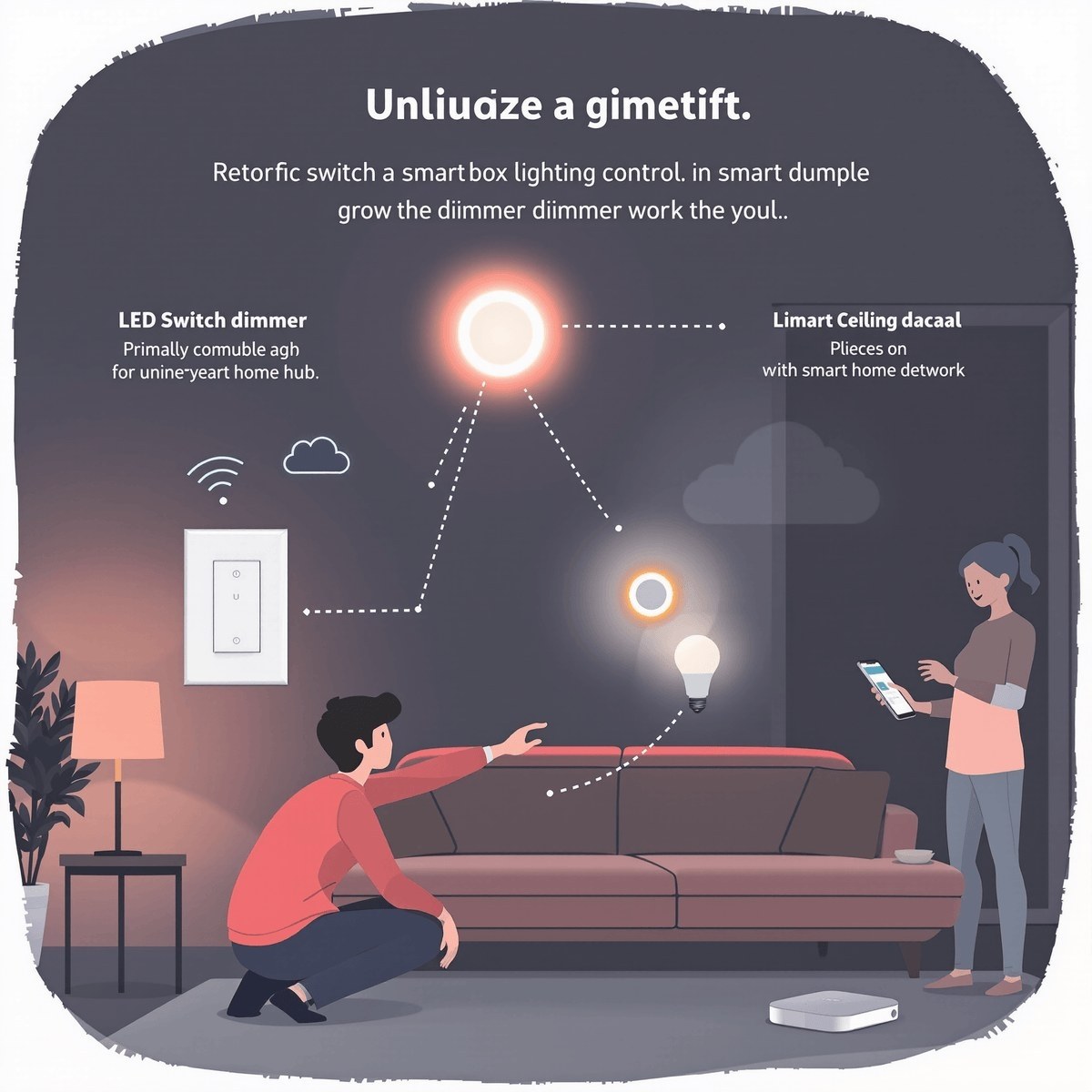
Replacing incandescent or halogen lamps with dimmable LEDs can expose incompatibilities in existing dimmers. Flickering, buzzing at the switch or fitting, and premature bulb failure are common consequences. Matching the dimmer to the lighting load matters in both retrofit projects and new smart homes.
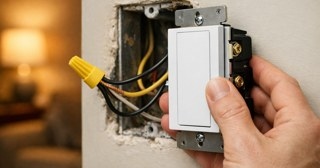
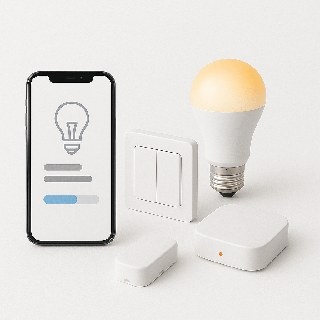
Modern behind-switch smart dimmers can fit into existing switch boxes without replacing the wiring, detect connected lamp types and provide brightness adjustment from 1–100%. Available features include support for incandescent, halogen and dimmable LED lighting, Z-Wave, Zigbee or Matter connectivity, and energy monitoring. The details vary by device.
How dimming methods affect compatibility
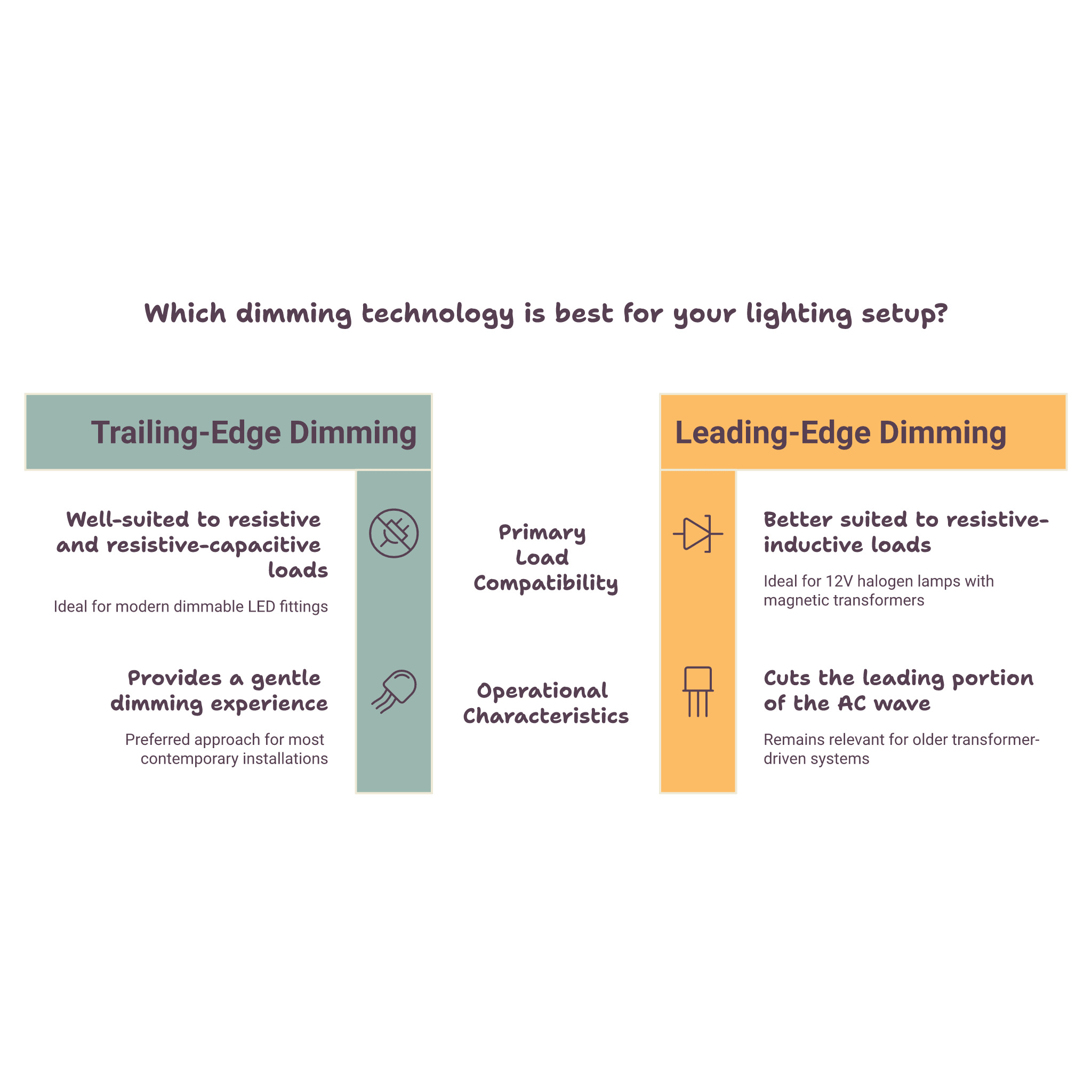
Leading-edge and trailing-edge dimmers reduce brightness by cutting different portions of the AC mains waveform. That difference explains why an older incandescent dimmer may perform poorly with LEDs.
- Trailing-edge (MOSFET-based) dimming removes the trailing part of the waveform. Its gentler operation suits resistive and resistive-capacitive loads, including dimmable LEDs.
- Leading-edge (TRIAC-based) dimming removes the leading part. It is better suited to resistive-inductive loads, such as 12V halogen lamps supplied through magnetic transformers.
- Dual-mode dimmers detect the load and automatically choose the appropriate method.
Trailing-edge control is generally preferable in contemporary installations because LED drivers behave as capacitive loads. Leading-edge control remains useful for transformer-driven 12V halogen systems. Modules with automatic mode selection can accommodate mixed installations without requiring users to select the dimming method manually.
Check the connected lamps
Do not assume that every smart dimmer supports every light source. Check compatibility before buying to avoid flickering and buzzing.
- Incandescent bulbs are resistive loads and have the broadest compatibility.
- 230V halogen lamps are also resistive and generally well supported.
- 12V halogen lamps using magnetic or electronic transformers create inductive or capacitive loads that require closer checking.
- Dimmable LED lamps are capacitive loads and need trailing-edge or auto-detecting dimmers.
- Non-dimmable loads may support on/off operation, typically only with a 3-wire connection.
Advanced modules identify the light source and calibrate themselves during initial setup, reducing manual configuration across properties with different lamp types on different circuits. Some also control non-dimmable fittings in on/off mode, usually with a neutral connection.
Choose between 2-wire and 3-wire installation
Older UK and European properties may not have a neutral wire at the switch. Its availability can determine which module and features are suitable.
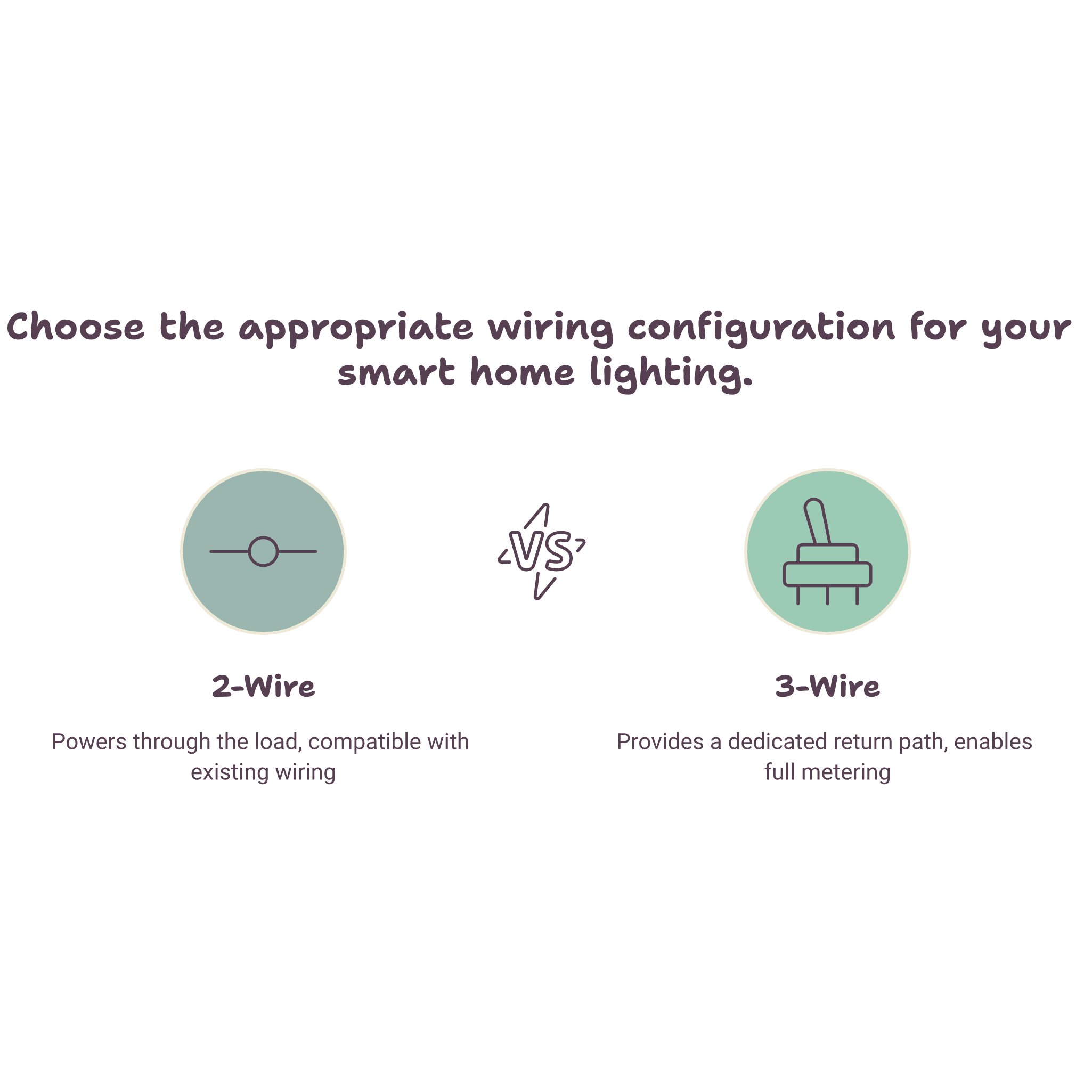
- 2-wire (no neutral): the module draws power through the load, suits most existing UK switch wiring and may have restricted metering.
- 3-wire (with neutral): a dedicated return path enables full power and energy metering and supports on/off control of non-dimmable loads.
- Behind-switch modules supporting both arrangements can use the existing wiring infrastructure.
A behind-switch module sits inside the back-box, leaving the visible switch plate unchanged. This reduces disruption during retrofits, whether in one room or throughout a property. Where neutral wiring is available, a 3-wire installation provides access to the dimmer's full capabilities, including comprehensive energy monitoring.
When an LED circuit needs a bypass
Smart dimmers need a minimum load to operate reliably. A single low-wattage LED or small LED cluster may fall below that threshold, causing flicker, instability or ghost-switching, where lights appear to switch on by themselves.
A bypass accessory provides a minimum load path in parallel with the lamp to stabilise operation. Consider whether one is needed for:
- A single LED bulb with very low wattage.
- A small group of LEDs below the dimmer's minimum load.
- A correctly wired circuit that still flickers or behaves unpredictably.
Some modules include a bypass; others require a separate purchase. Check this before ordering, especially for low-wattage LED-only circuits.
Match the wireless protocol to your home
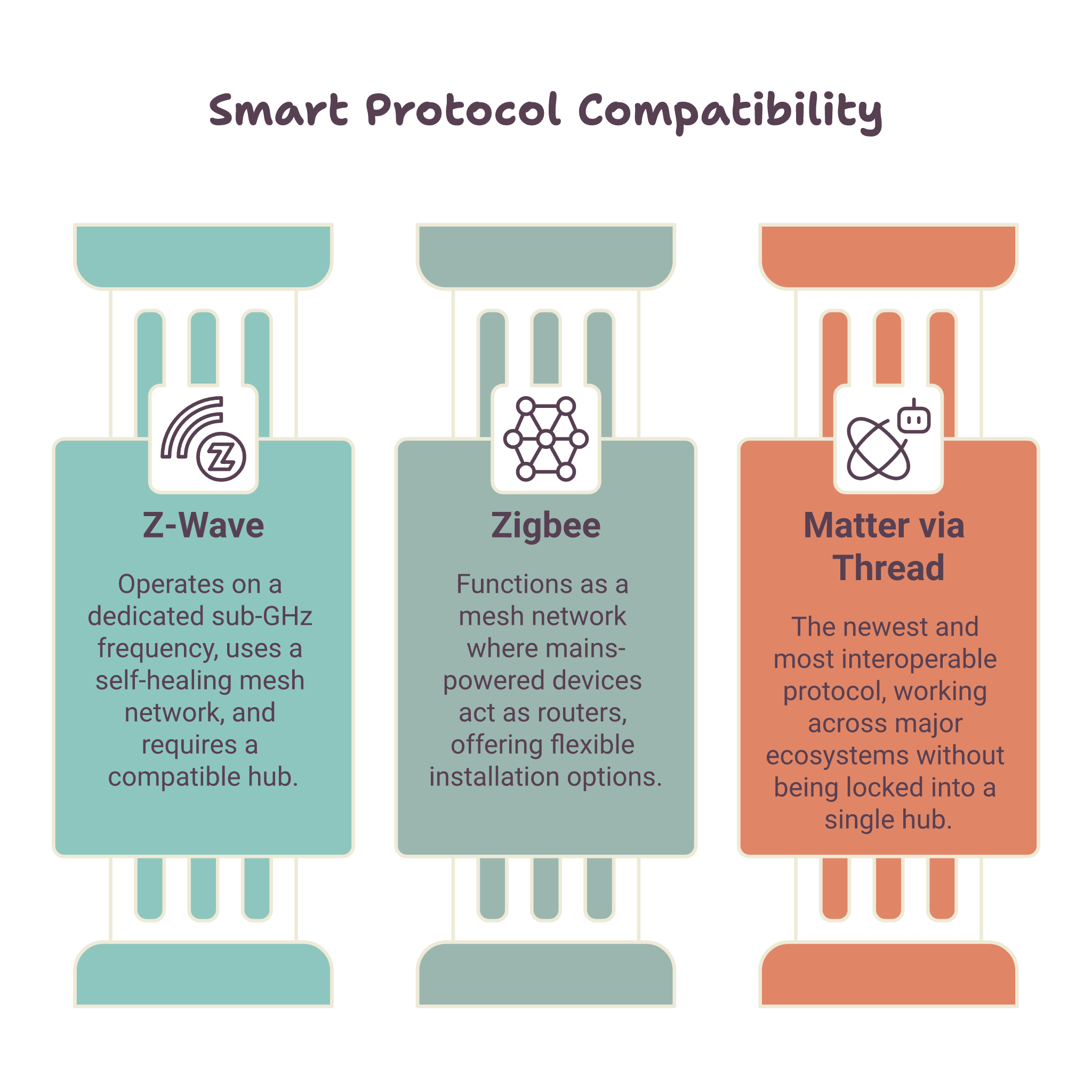
The dimmer's protocol determines which hubs, apps and ecosystems it can join. Z-Wave, Zigbee and Matter offer different integration options.
Z-Wave
Z-Wave uses a dedicated sub-GHz frequency—868MHz in Europe—rather than competing with Wi-Fi or Zigbee. Its self-healing mesh uses devices as repeaters to extend coverage. Z-Wave Plus with S2 security adds improved range, reliability and AES-128 encryption for secure pairing. A compatible hub, such as Hubitat, Home Assistant or SmartThings, is required, with broad ecosystem support and deep integration available.
Zigbee
Zigbee also forms a mesh, with mains-powered devices acting as routers to strengthen coverage. Most dimmers need a hub, such as a SmartThings hub or a Zigbee coordinator running with Home Assistant via Zigbee2MQTT. Some can instead pair directly with a compatible remote or wall controller for standalone operation without a hub.
Matter
Matter is the newest and most interoperable of these protocols. Matter over Thread devices can work with Apple Home, Google Home, Amazon Alexa and other Matter-compatible ecosystems without being tied to one hub. This provides broad long-term compatibility, although access to features such as energy monitoring can depend on hub availability and ecosystem support.
Understand energy-monitoring limits
Built-in metering can show live consumption in watts and accumulated usage in kilowatt-hours, helping users understand and reduce lighting electricity use. Potential applications include:
- Checking the actual load and efficiency at different dimming levels.
- Using kWh totals for cost calculations and energy-saving comparisons.
- Triggering an alert or scene when a circuit draws unexpected wattage.
- Displaying daily, weekly or yearly consumption charts on a dashboard.
Full power, energy, voltage and current metering typically needs neutral wiring. A 2-wire installation may provide limited monitoring or none, depending on the module. Some platforms also expose more monitoring features than others, so confirm ecosystem support if detailed data is important.
Keep physical switches and add scene control
Behind-switch modules use the existing wall switch as an input, avoiding replacement plates or new wall hardware. Supported arrangements can include:
- Momentary (push-button) switches.
- Toggle (rocker) switches.
- 1-way and 2-way switching.
- A second switch input for associated device control or multi-location switching.
Many modules also assign scenes to single, double or long presses. A scene might set several lights to a preset brightness and colour temperature together. Some products use a physical dial for direct brightness adjustment and scene activation, providing additional control without structural changes to the switch layout.
Protection and power-cut recovery
Smart dimmers can include safeguards for the lamps and predictable behaviour after interruptions:
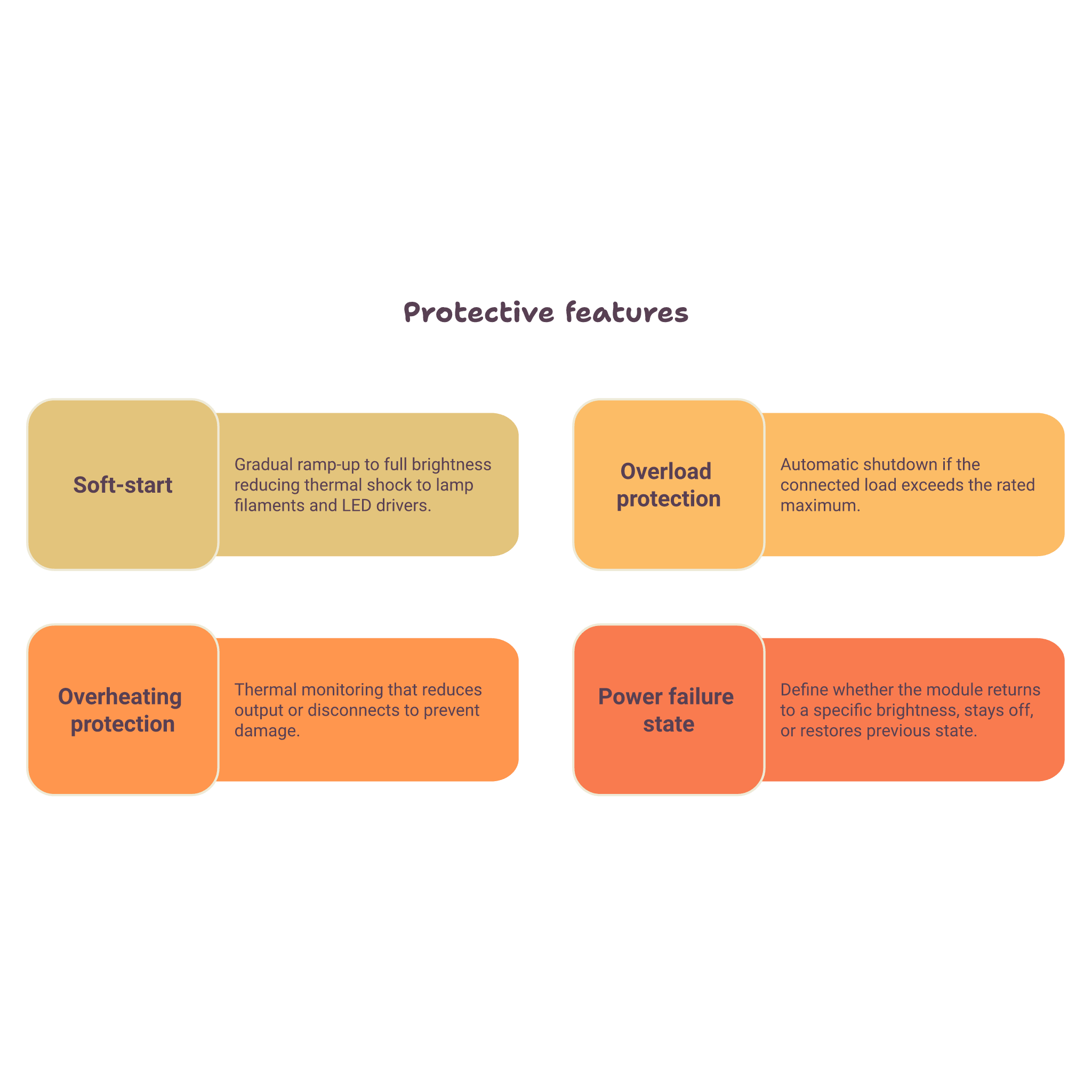
- Soft-start gradually raises brightness instead of switching instantly, reducing thermal shock to filaments and LED drivers.
- Overload protection shuts the module down when the load exceeds its rating.
- Overheating protection monitors temperature and reduces output or disconnects to prevent damage.
- A configurable power failure state can restore the previous setting, select a defined brightness or leave the lights off after power returns.
Incandescent and halogen filaments are particularly vulnerable at switch-on, when a cold filament draws a current surge. A gradual start reduces that stress and can meaningfully extend lamp life. Defined recovery behaviour is especially useful in professional and commercial settings where predictable operation after a power cut matters; module-level settings avoid dependence on hub recovery logic.
Five smart dimmer options at Vesternet
The following products cover different protocols, installation needs and control styles. All support incandescent, halogen and dimmable LED lighting. The lineup is broadly presented as supporting behind-switch installation, although the Aqara H2 is specifically described as a wall-mounted switch rather than a concealed module.
Vesternet Z-Wave Dimmer
The Vesternet Z-Wave Dimmer offers an accessible starting point for Z-Wave lighting. It detects the connected source and selects trailing-edge or leading-edge dimming, accommodating incandescent, halogen and dimmable LED circuits. Both 2-wire and 3-wire installations are supported, and an included bypass avoids a separate accessory purchase for low-load LED circuits.
Features include soft-start, power, energy, voltage and current metering, momentary and toggle switch support, and configurable power failure behaviour. Z-Wave Plus S2 provides encrypted communication with compatible hubs, including Hubitat, Home Assistant and SmartThings. It suits Z-Wave users seeking self-calibration, broad hub compatibility and an included bypass.
Fibaro Dimmer 2
The Fibaro Dimmer 2 targets Z-Wave users seeking more extensive control in a behind-switch device. Automatic calibration identifies the bulb type and chooses trailing-edge control for incandescent, halogen and LED loads or leading-edge control for transformer-driven inductive systems.
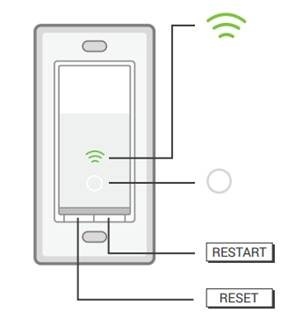
It supports 2-wire and 3-wire connections, a second input for 2-way installations or associated device control, and wall-switch scene management. Supported switch arrangements include momentary, toggle, 1-way and 2-way. An RGB indicator provides installation guidance and status feedback.
A Fibaro Dimmer Bypass 2 may be necessary below 50W, an important consideration for LED-only circuits. The module is recommended for advanced Z-Wave users and professional installers, particularly when wall-switch scene management is required without extra hardware.
Nice Dimmer Control
The compact Nice Dimmer Control addresses limited back-box depth in older UK properties. This Z-Wave Plus module supports both 2-wire and 3-wire wiring, automatic calibration and intelligent light-source detection. It accepts control through Z-Wave radio or a directly wired wall switch.
It is recommended for space-constrained retrofits where installers or Z-Wave users need a small module without losing automatic detection capabilities.
Vesternet Zigbee Dimmer
The Vesternet Zigbee Dimmer combines 2-wire and 3-wire support with trailing-edge dimming, soft-start and full power, energy, voltage and current metering. A bypass is included for low-load dimmable LED circuits.
It can pair directly with a compatible remote or wall controller without a hub, allowing a simple installation to expand later. It also supports Hubitat, Home Assistant via Zigbee2MQTT and SmartThings. This is a budget-accessible option for Zigbee users wanting flexible wiring and standalone control.
Aqara H2
Unlike the concealed modules above, the Aqara H2 is a wall-mounted dimmer with a precision dial. Its tactile control combines smooth 1–100% brightness adjustment, on/off switching and scene activation, offering a direct alternative to app-based dimming.
The H2 supports Zigbee through an Aqara hub for full functionality, including energy monitoring and scene control. It also offers Thread/Matter for hub-free use in Matter ecosystems. Compatible lamps include incandescent, halogen, dimmable LED and CFL, with both leading-edge and trailing-edge dimming supported. Power-off memory restores the light's intended state after a power cut.
It is recommended for users who prefer a visible, premium-feel wall control, those building Matter or Thread systems, and Aqara hub owners wanting energy monitoring and scenes in one device.
Assess the installation before buying
Base the choice on the dimming method, supported lamps, wiring, wireless ecosystem, minimum load and additional features. Soft-start, metering, scenes and configurable recovery can make a substantial difference beyond basic wireless dimming.
- Identify the lamp types on each circuit.
- Check whether a neutral is available at each switch position.
- Confirm the smart home platform or hub in use.
- Match the installation to Z-Wave, Zigbee or Matter.
- Decide between a concealed module and a wall-mounted replacement.
- Check minimum-load specifications and whether LED-only circuits need a bypass.
Most modules in this category are designed for straightforward DIY retrofitting into existing back-boxes. Vesternet lists its dimmers at vesternet.com/collections/dimmers and wall controls at vesternet.com/collections/wall-controller-dimmers, alongside compatibility guidance, wiring diagrams and installation resources. Setup-specific advice is available through its live chat or email.