Two protocols with complementary strengths
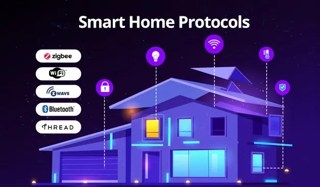
Zigbee and Z-Wave are communication protocols, like Wi-Fi and Bluetooth, but were developed specifically for smart home equipment. They connect devices such as motion sensors, wall switches and smart plugs that need dependable responses without transferring large amounts of data.
For lighting, sensors and an extensive choice of budget-friendly devices, Zigbee is often the easier starting point. Z-Wave generally has the advantage for coverage through thicker walls and dependable switches, relays and locks. A mixed setup can use Zigbee for variety and responsiveness while relying on Z-Wave for infrastructure-level controls.
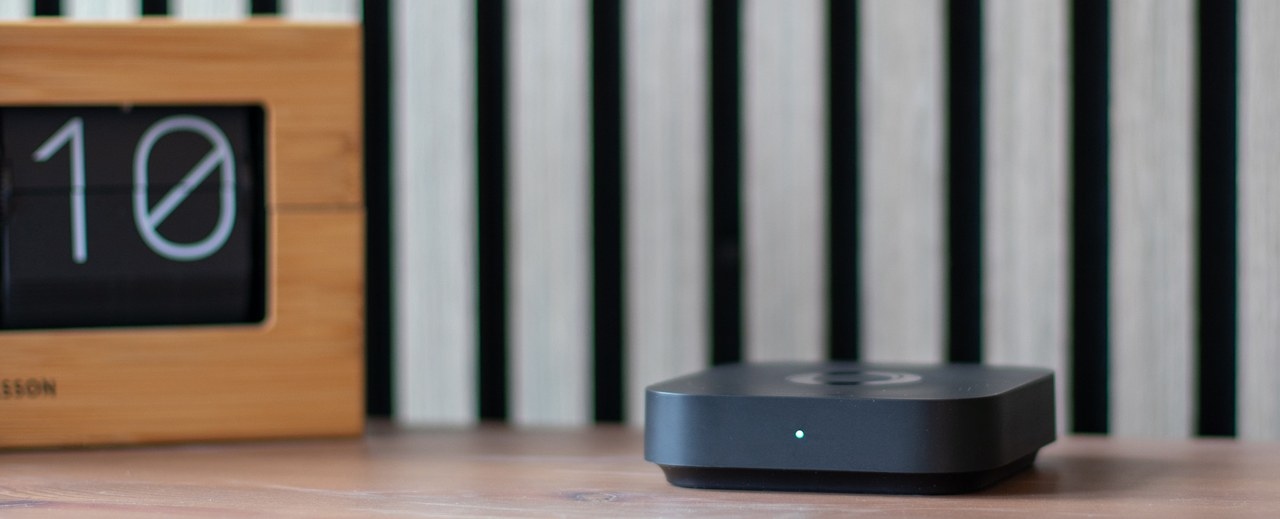
A multi-protocol controller such as Homey Pro manages both, allowing you to select devices for their jobs rather than commit to one standard.
| What you care about | Zigbee | Z-Wave |
| Device variety | Huge range, especially lights and sensors | Broad, but typically smaller selection |
| Typical cost | Often more budget-friendly | Often slightly pricier |
| Wall performance | Good, but can be affected by busy wireless environments | Often strong in homes with thicker walls |
| Consistency across brands | Can vary depending on device profiles and ecosystems | Often feels more predictable device-to-device |
| “Best for” | Fast sensors, lighting scenes, buttons | Switches, relays, locks, backbone devices |
What Zigbee and Z-Wave have in common
Mesh networking
Both protocols let devices relay messages instead of requiring every device to reach the hub directly. A nearby repeater, also called a router, can carry a signal onward, extending coverage beyond the hub's direct reach. The mesh can also find another route when a device goes offline.
Mains-powered devices such as plugs and switches act as repeaters, strengthening the network as more are added. Battery-powered sensors generally do not perform this role. In many average homes, devices are close enough to the hub that repeaters are not strictly necessary, although concrete walls, floors and metal pipes can still obstruct signals.
Low energy use
Both standards require little power, allowing many battery devices to operate for years. Motion and door sensors can remain in deep sleep until triggered, wake briefly to transmit a packet, then return to sleep. Some can run for years on a single coin cell battery, reducing maintenance compared with power-hungry Wi-Fi alternatives.
Repeaters do more work and consume more energy, which is why they are usually mains-powered.
Local operation and security
Automations run on a local hub rather than depending on a remote cloud server. Lights can therefore continue responding when the internet fails, while avoiding cloud dependency improves response times and data privacy. Both Zigbee and Z-Wave include modern encryption and are suitable for secure installations.
Where the protocols differ
Frequency and interference
Zigbee operates on the 2.4 GHz band used worldwide by Wi-Fi and Bluetooth. It provides good indoor coverage, but nearby networks can compete for the same spectrum.
Z-Wave uses sub-GHz frequencies, typically around 908 MHz in the US or 868 MHz in Europe. Its lower frequency generally travels farther through walls and floors and avoids the crowded 2.4 GHz band. That can be particularly useful in large, multi-floor homes.
Compatibility and price
Z-Wave is a closed standard with strict certification intended to ensure that every device works with every hub. This generally produces a more straightforward plug-and-play experience.
Zigbee's more open approach supports cheaper hardware and a broad selection, but variations between brands can occasionally require workarounds. Z-Wave is often more expensive, particularly for lighting and sensors. Even so, a small saving matters less if an unreliable device costs time and effort; a strong mesh is more important than a modest price difference.
Speed, range and network size
Zigbee supports data rates up to 250 kbps, compared with Z-Wave's maximum of 100 kbps. That makes Zigbee better suited to tasks involving more data, and it usually responds faster for small sensors and buttons.
Z-Wave offsets its lower speed with a substantially longer line-of-sight range between nodes. It can often cover a larger property with fewer repeaters. Actual range and latency still depend on the building's layout.
A single Z-Wave network supports up to 232 devices. Zigbee can theoretically support around 65,000 in one network. Most households will not approach the Z-Wave limit, but very large commercial installations may reach it sooner, making Zigbee a frequent choice for networks at that scale.
Device choice: sensors, lighting and built-in controls
Zigbee offers a large ecosystem of motion and contact sensors, water leak detectors, smart plugs, bulbs, buttons and presence sensors. Its speed and affordability make it a strong option for motion-activated lighting and other quick-response tasks.
Z-Wave has a stronger focus on high-quality switches, relays, thermostats and locks. It is commonly found in professional-grade wall switches and built-in relays, where reliable infrastructure-level control is the priority.
These strengths explain why many homes use both: Zigbee for sensors and lighting, and Z-Wave for hard-wired controls. Neither protocol needs to replace the other.
Mesh design matters as much as protocol choice
Problems attributed to Zigbee or Z-Wave often come down to the mesh itself. A house full of scattered battery sensors, without powered devices to relay their messages, can be unreliable with either standard.
Well-placed mains-powered plugs, bulbs and switches provide the supporting network. A smart plug can therefore do more than control an appliance: it can strengthen coverage in a room where signals fade. Zigbee's many affordable routers make it particularly easy to build a dense mesh.
Apartments and compact homes
Shorter distances help Zigbee form a dense, responsive network quickly, especially when powered bulbs or plugs are distributed across rooms. Apartments also face interference from neighboring Wi-Fi, Bluetooth and other 2.4 GHz devices.
Zigbee can still perform well in that environment, but avoid relying entirely on battery devices. A few smart plugs in key rooms can provide stable anchors and reduce delays.
Larger homes
More rooms, floors and difficult building materials make coverage harder. Z-Wave is often more forgiving when devices are widely spaced or signals must cross walls and floors.
Zigbee can also serve a larger home, provided its mesh is planned more deliberately. Place enough powered devices along the route and avoid leaving equipment at the edge of coverage.
Sensor-based routines can be especially useful across a larger property. Motion-triggered hallway lighting reduces unnecessary trips to switches, while door and window sensors can provide a check that everything is closed without walking through the house.
Combining both with Homey Pro
Homey Pro natively supports Zigbee and Z-Wave alongside Matter, Thread, Wi-Fi, Bluetooth, 433 MHz and Infrared. Rather than maintaining isolated systems, it coordinates devices across technologies within shared automations.
A Zigbee hallway motion sensor could activate a Z-Wave bathroom switch. A Z-Wave door sensor could control a Zigbee lamp, or a bedtime routine could include devices from both networks. There is no need for separate controllers for these two protocols when using Homey Pro.
This flexibility also makes later additions easier: you can choose products for their purpose rather than restrict every purchase to the protocol you started with. Homey is presented as working across brands and device types to bring them into one system.
Beyond these two protocols, Homey's supported communication standards also include KNX. It integrates with Amazon Alexa, Google Home and Apple Home, allowing different platforms and technologies to participate in the same setup.
Start with a useful routine
Instead of buying equipment for the entire house at once, begin with one everyday situation you want to improve.
- Arriving home: combine a motion sensor with a couple of smart bulbs. Adding a smart plug in a strategic room can strengthen the mesh at the same time.
- Going to bed: build a goodnight routine that dims lights, turns off devices and makes sure doors are secure. Dependable switches, dimmers and a smart lock can support that routine.
Choose Zigbee when affordable sensors, buttons and responsive lighting are the priority. Consider Z-Wave for stable switches and relays or communication through walls and floors. Both work locally without internet access, and Homey Pro lets their strengths complement each other as your setup expands.